
Effective January 1, 2026, Massachusetts enacted landmark legislation requiring health insurance plans in the state to cover Applied Behavior Analysis (ABA) therapy for individuals diagnosed solely with Down syndrome. This policy shift removes a longstanding coverage gap, opening access to evidence-based behavioral support services that were historically limited to people with Autism Spectrum Disorder (ASD) or those with dual diagnoses. Massachusetts Legislature+1
What’s Changing and Why It Matters
Under the new law named AN ACT RELATIVE TO APPLIED BEHAVIORAL ANALYSIS THERAPY, most commercial insurers, MassHealth plans, and state employee health plans must provide coverage for ABA services, in addition to speech, occupational, and physical therapies, for children and adults with a Down syndrome diagnosis. Before this change, coverage for ABA therapy typically required a dual diagnosis of autism spectrum disorder, leaving many families without access to a service that can support skill development, communication, and adaptive functioning. Massachusetts Legislature+1
Advocates from the Massachusetts Down Syndrome Congress and state legislators alike have framed this reform as a monumental step toward equitable access to care and a meaningful acknowledgment that individuals with Down syndrome can benefit from a full spectrum of therapeutic interventions, including ABA. MDSC
Implications for Providers and Families
For providers serving neurodiverse populations, including those with Down syndrome, autism, ADHD, or complex developmental profiles, this expanded coverage presents new opportunities and responsibilities:
- Broader Eligibility: ABA therapy can now be prescribed and reimbursed for a wider group of individuals, not only those with ASD.Massachusetts Legislature
- Tech Stack Support: Provider technology systems must support accurate diagnosis selection and capture ABA-specific services and outcomes across multiple neurodevelopmental profiles.
- Care Planning: Clinicians and care teams will need to adapt individualized treatment plans that honor the unique needs of people with Down syndrome while integrating ABA methods where appropriate.
How Hi Rasmus Can Support Organizations Serving Neurodiverse Populations
The Hi Rasmus platform is uniquely positioned to help providers, clinics, and community organizations navigate this change and better support neurodiverse populations, including individuals with Down syndrome.
1. Diagnosis Capture and Custom Client Data Fields
Hi Rasmus enables care organizations to store and segment client diagnoses, including Down syndrome and other neurodevelopmental conditions, through customizable data fields. This precision supports:
- Accurate documentation for clinical, billing, and outcomes purposes
- Easy integration into progress reports to meet funder requirements.
- Enhanced cohort segmentation for reporting, research, and quality improvement
By capturing detailed diagnosis data at intake and throughout care, organizations can ensure services are fully aligned with cultural, clinical, and policy expectations.
2. Outcomes Tracking and Reporting
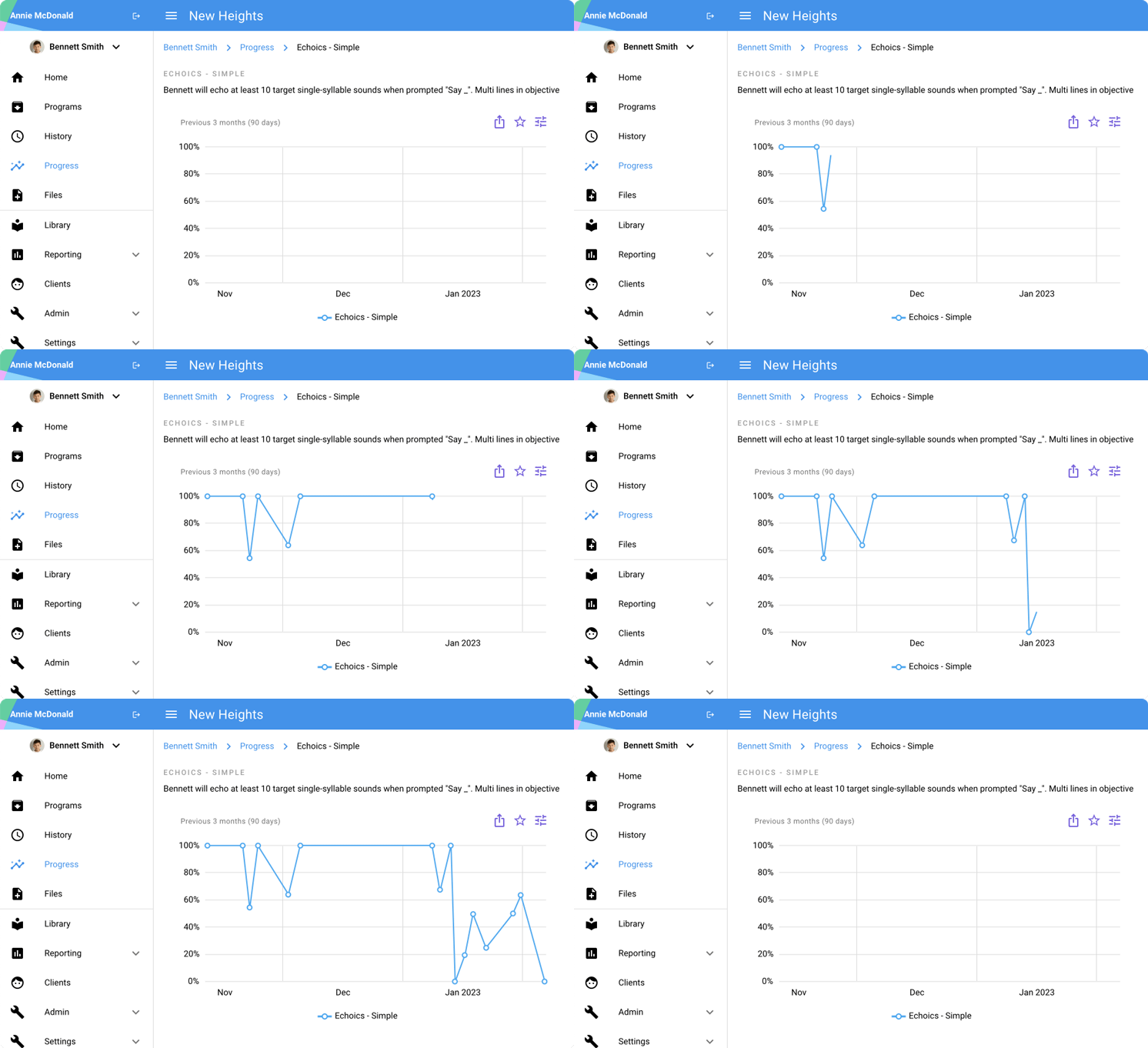
One of the most significant advantages of Hi Rasmus is its robust infrastructure for outcomes reporting. The platform allows teams to assess effectiveness within and across diagnostic groups, support internal quality improvement, and respond confidently to payer and regulatory expectations.
Hi Rasmus enables organizations to:
- Standardize how outcomes are captured and analyzed across neurodevelopmental profiles, while still honoring individualized treatment goals and clinical nuance.
- Measure core clinical outcomes at the client, cohort, and organizational levels.
- Aggregate and segment outcomes data by diagnosis, payer, or demographic variables, supporting effective clinical decision making and transparent reporting to stakeholders.
By supporting cross-diagnostic outcomes visibility within a single system, Hi Rasmus helps organizations strengthen clinical decision-making and demonstrate value across diverse populations.
3. Enhanced Care Coordination
Neurodiverse individuals and their families often benefit from multi-disciplinary support that goes beyond a single therapy. Hi Rasmus’s scheduling, care planning, and multi-disciplinary friendly clinical tools help teams coordinate:
- ABA therapy
- Speech, occupational, and physical therapy
- Mental Health Services
- Schools
- Family education and caregiver involvement
- Telehealth and in-person sessions
This integrated approach fosters continuity and personalization of care, thereby improving engagement and outcomes.
4. Supporting Equity and Inclusion
Expanding coverage is an essential step toward equity, but realizing that promise requires tools that help organizations monitor disparities, deliver culturally responsive care, and build systems that reflect the diversity of neurodevelopmental profiles.
In doing so, providers can ensure that expanded coverage translates into real access and meaningful progress for all neurodiverse individuals.
Looking Ahead
Massachusetts’s expansion of ABA coverage to include Down syndrome is a signal of growing recognition that high-quality, evidence-informed services should be available to all who can benefit. By leveraging tools like Hi Rasmus to capture accurate data, measure outcomes, and coordinate care across modalities, organizations can rise to this moment of change and deliver more inclusive, practical support for neurodiverse populations.