
The BACB has officially introduced a major shift in how Registered Behavior Technicians (RBTs) maintain certification—and it’s a change every ABA organization needs to understand before 2026.
In our recent webinar, “Conquer the 2026 RBT PDU Requirements,” Hi Rasmus experts broke down exactly what’s changing, why it matters, and how organizations can confidently support RBTs through the new professional development model.
If you supervise, train, or manage RBTs, this webinar is a must-watch.
What’s Changing in the 2026 RBT Certification Requirements?
Historically, RBTs renewed their certification through an annual competency assessment. Beginning in 2026, the BACB is replacing that requirement with ongoing professional development units (PDUs).
Here’s what RBTs will need moving forward:
- 12 RBT PDUs every two years
- PDUs must be specifically designed for RBTs (not BCBA CEUs)
- Training must expand upon the RBT Task List
- Events can be live or asynchronous, but must meet BACB criteria
- PDUs must be delivered by qualified professionals
This shift places greater emphasis on meaningful skill development—not just maintenance of baseline competencies.
The Three Ways RBTs Can Earn PDUs
The webinar clearly outlines the three approved pathways for earning RBT PDUs:
1. ACE Provider Events
These include conferences, webinars, and community learning events hosted by BACB-approved providers. Key requirements include:
- Clearly defined learning objectives
- Instruction in 25–30 minute increments
- BACB-required PDU documentation
- Live attendance for credit
Hi Rasmus announced its first-ever live RBT PDU event, kicking off this new era of professional development.
2. Employer-Led Inservice Training
This option allows organizations to deliver PDUs internally. These events:
- Must be led by a BCBA, BCaBA, or BCBA-D
- Must be structured as active learning experiences (BST, role play, discussion)
- Cannot be passive activities like reading or listening alone
- Must be facilitated by the RBT’s employer
This pathway gives organizations powerful flexibility to align PDUs with real clinical needs.
3. Graduate Coursework
RBTs enrolled in accredited graduate programs may earn PDUs through qualifying coursework. (Hi Rasmus does not support this pathway directly.)
How Hi Rasmus Helps Organizations Meet RBT PDU Requirements
One of the most valuable parts of the webinar was a live walkthrough showing how Hi Rasmus Staff Profiles can support RBT PDUs from start to finish.
Organizations can use Hi Rasmus to:
- Identify staff skill gaps using baseline performance data
- Design targeted inservice PDU trainings
- Run group training sessions and collect real-time performance data
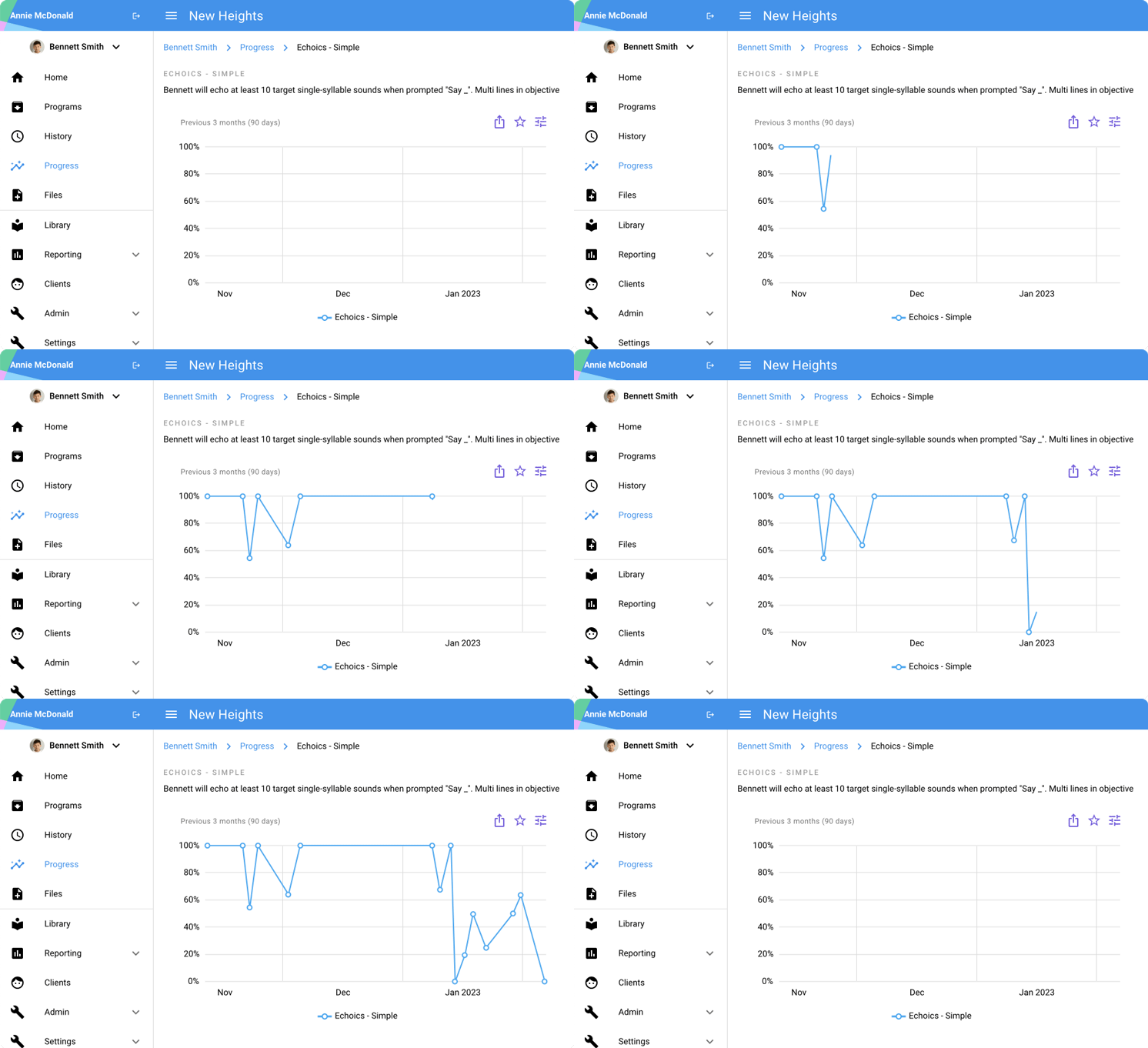
- Track staff progress over time with visual graphs
- Embed training outcomes into performance reviews and training plans
- Maintain permanent documentation for compliance and reporting
Instead of treating PDUs as isolated events, Hi Rasmus helps turn them into measurable, data-driven training systems.
Why This Matters for ABA Leaders
The 2026 RBT PDU requirements aren’t just a compliance update—they’re an opportunity.
Organizations that prepare now can:
- Improve staff performance and consistency
- Increase RBT engagement and retention
- Align training with clinical outcomes
- Reduce administrative burden
- Future-proof their certification processes
This webinar provides a clear roadmap to do exactly that.
Watch the Full Webinar On Demand
If you want a deeper dive into:
- BACB guidance on RBT PDUs
- What qualifies (and what doesn’t)
- Real-world training examples
- How to operationalize PDUs inside your organization