What Is CASP ACQ Accreditation and Why Does It Matter for ABA Organizations?
The Council of Autism Service Providers (CASP) Accreditation for Clinical Quality (ACQ) is the leading accreditation framework for organizations delivering Applied Behavior Analysis (ABA) services. ACQ accreditation signals that an organization meets the highest standards for ethical care, clinical quality, and operational excellence in autism services.
For behavioral health organizations, achieving and maintaining ACQ accreditation requires more than understanding the standards. It requires operationalizing them — embedding them into clinical workflows, supervision systems, data infrastructure, and outcomes measurement so they drive consistent, measurable results every day.
This is where most organizations struggle. The challenge is not knowing what the standards require. The challenge is building a system of care that makes those standards repeatable and demonstrable at scale.
Hi Rasmus is a CASP Business Affiliate — an organization recognized for its alignment with CASP’s mission and standards — that exists specifically to solve this problem. Its mission: to empower behavioral health professionals with tools that enhance the quality of therapy services, with a goal of positively impacting the lives of 1 million children with Autism.
This guide explains, standard by standard, how Hi Rasmus helps ABA organizations move from standards in theory to excellence in practice.
The Core Challenge: Operationalizing Clinical Standards at Scale
Across every domain of ACQ accreditation, organizations face a common set of obstacles:
- Fragmented systems across clinical, operational, and reporting workflows make it difficult to translate standards into repeatable, day-to-day practice.
- Limited real-time visibility into clinical performance, caseload activity, and patient-level outcomes.
- Manual, resource-intensive processes that limit scalability and consistency across clinicians, supervisors, and sites.
- Disconnected data that cannot easily be linked from individual clinical decisions to aggregated organizational insight to demonstrated outcomes.
Solving these problems requires an integrated system of care — one that connects structure, process, and outcomes. This is the Donabedian model of healthcare quality, the conceptual foundation that ACQ accreditation is built on: the systems an organization builds enable the processes that produce the outcomes. Hi Rasmus is designed to operationalize this connection.
ACQ Standard 1.01: Guiding Principles — Ethical, Patient-Centered Care
What the Standard Requires
ACQ Standard 1.01 establishes the ethical and philosophical foundation of accreditation. It requires organizations to demonstrate ethical, patient-centered care through objective, data-driven clinical decision-making, visible clinical fidelity and consistency across teams, and supervision infrastructure aligned with CASP guidelines.
How Hi Rasmus Supports Compliance
Hi Rasmus provides the data infrastructure that makes patient-centered care measurable and defensible:
- Built-in data capture supports objective, data-driven clinical decisions at every stage of care delivery.
- Clinical fidelity dashboards give organizations visibility into consistency across clinicians, supervisors, and sites.
- Supervision infrastructure is built into the platform, aligned to CASP’s guidelines for oversight and accountability.
ACQ Standard 6.01: Access to Care — Equitable and Measurable
What the Standard Requires
ACQ Standard 6.01 requires organizations to demonstrate equitable access to care — with real-time visibility into who is receiving services and who is not, and the systems to identify and address gaps across populations, locations, and funding sources.
How Hi Rasmus Supports Compliance
- Real-time access visibility shows which clients are actively receiving care and surfaces gaps that need to be addressed.
- Population-level reporting enables identification of disparities across demographics, geographies, and payer sources.
- Telehealth and flexible care delivery tracking supports access to services across settings and modalities.
- Standardized service delivery models allow organizations to scale access without sacrificing quality.
Access to care is not just a compliance checkbox. Hi Rasmus enables organizations to measure and report on access as a clinical and operational outcome.
ACQ Standards 6.04, 6.05, and 6.06: Clinical Workflows — Intake, Assessment, and Treatment Planning
What the Standards Require
Standards 6.04 through 6.06 define the clinical foundation of care delivery: individualized client onboarding, data-informed assessment, and evidence-based treatment planning. The core requirements are individualized care, data-informed clinical decision-making, and evidence-based service delivery.
Where Organizations Struggle
Fragmented systems make it difficult to connect intake data to assessment results to treatment decisions in a way that is consistent, auditable, and scalable. Clinical teams often work in silos, with information that does not flow between stages of care.
How Hi Rasmus Supports Compliance
6.04 — Intake (Client Onboarding & Data Capture) Hi Rasmus provides configurable intake forms that capture and structure client data from the start of the care relationship, ensuring the clinical record is complete and usable from day one.
6.05 — Assessments (Data-Informed Clinical Insight) Hi Rasmus centralizes assessment results and directly connects them to treatment planning decisions, so clinicians are not working from disconnected or outdated information.
6.06 — Treatment Planning (Individualized, Evidence-Based Care) Hi Rasmus enables individualized treatment plans and goals that are directly aligned to clinical assessments and diagnoses — not templated defaults.
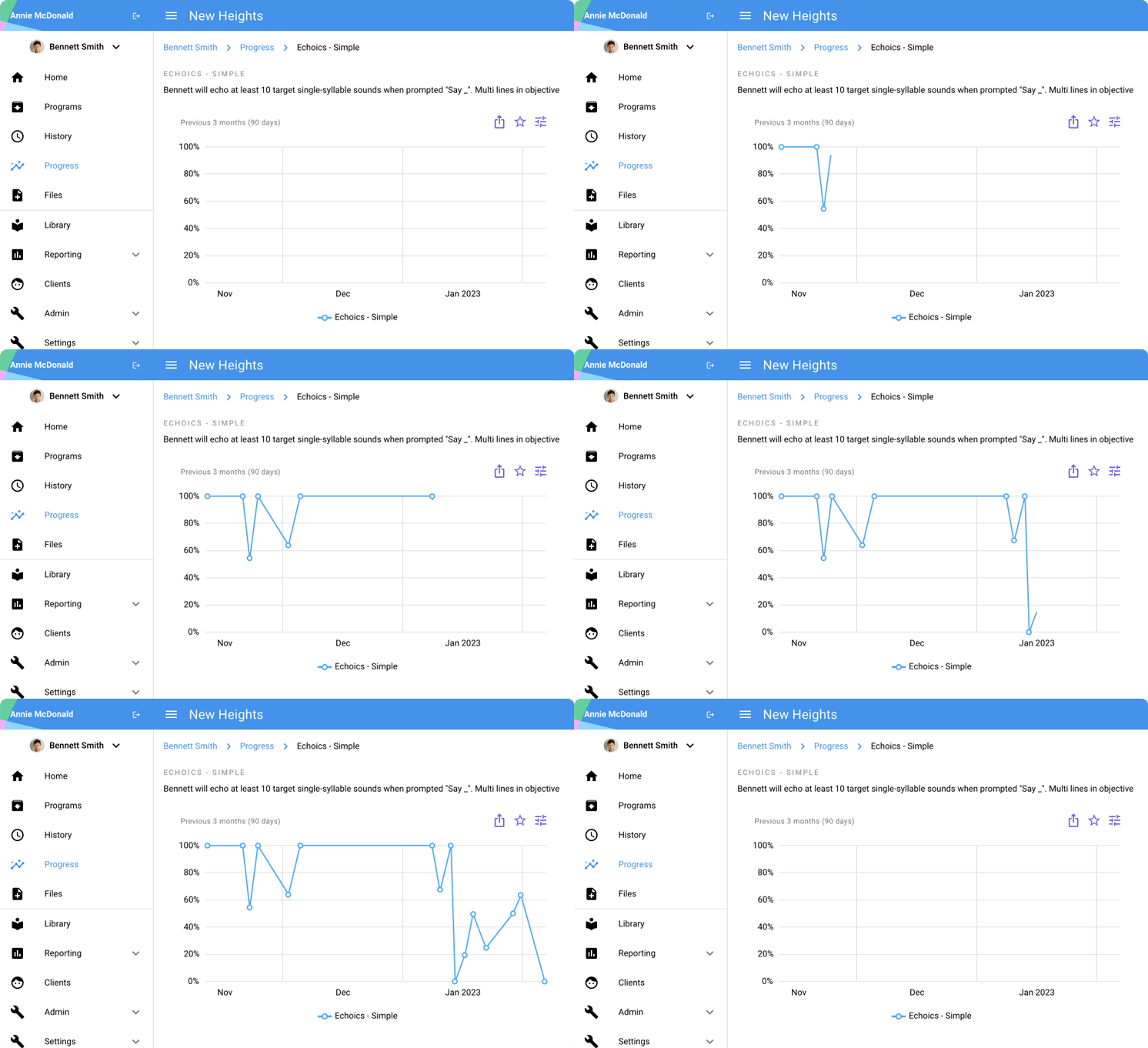
Progress Visibility (Continuous Evaluation) Hi Rasmus provides integrated progress views that connect intake, treatment, and outcomes over time, supporting continuous clinical evaluation and adjustment.
Clinical outcomes are not produced by isolated activities. They are the result of an integrated system of care. Hi Rasmus connects intake to assessment to treatment to outcomes in a single, continuous clinical record.
ACQ Standard 6.09: Coordination of Care —Interdisciplinary Collaboration and Caregiver Engagement
What the Standard Requires
ACQ Standard 6.09 and the ABA Practice Guidelines define what collaborative, family-centered care looks like in practice: team-based care delivery, active caregiver engagement, and consistent communication across providers and settings.
Where Organizations Struggle
Caregivers are too often passive recipients of care rather than active participants in it. Maintaining consistency across clinicians, supervisors, and sites — and ensuring caregivers are informed and engaged — remains one of the most significant service delivery gaps in the ABA field.
How Hi Rasmus Supports Compliance
Caregiver Engagement Tools Hi Rasmus supports caregiver involvement in line with ABA Practice Guidelines, enabling shared visibility into treatment plans, progress, and outcomes. Organizations can create and generate client forms for caregiver input and data collection, and caregivers can contribute directly to care delivery.
Centralized Communication and Documentation Hi Rasmus provides secure client file storage and sharing across teams and caregivers, ensuring everyone has access to consistent, up-to-date information — regardless of role or location.
Connected Care Experience Caregivers can view progress, access reports, and communicate with clinical teams through the platform. Hi Rasmus supports a transparent, collaborative, family-centered care model that treats caregivers as partners, not bystanders.
ACQ Standards 5.02–5.06, 6.03, and 6.08: Supervision, Caseload Management, and Active Treatment
What the Standards Require
This cluster of standards defines clinical delivery at the organizational level: clearly defined roles and responsibilities, high-quality ongoing supervision, appropriate caseload oversight, and active, data-driven treatment implementation.
Where Organizations Struggle
Limited real-time visibility into clinical performance makes it difficult to demonstrate consistency and quality across teams and locations. Manual oversight processes do not scale. Without integrated systems, supervision becomes reactive rather than proactive, and caseload inequities go undetected.
How Hi Rasmus Supports Compliance
5.02–5.05 — Roles (Clinical Team Structure) Hi Rasmus provides role-based workflows and permissions that align staff responsibilities to care delivery, making organizational structure visible and manageable within the system.
5.06 — Supervision Hi Rasmus offers integrated supervision tracking and documentation, ensuring consistency, compliance, and a clear audit trail for accreditation review.
6.03 — Caseload Management Hi Rasmus gives organizations real-time visibility into caseload distribution and staff activity, enabling quality oversight before problems affect patient care.
6.08 — Active Treatment Hi Rasmus provides real-time session data and program tracking to ensure treatment is actively implemented and adjusted — not just planned and filed.
ACQ Standards 6.10, 6.11, and 8.03: Quality, Outcomes, and Accreditation Readiness
What the Standards Require
This final standard cluster addresses the ultimate goal of ACQ accreditation: measurement-based care, individual and aggregated outcomes evaluation, continuous quality improvement, and alignment to value-based care. Standards 6.10, 6.11, and 8.03 require organizations to demonstrate that their systems produce measurable, defensible clinical outcomes.
How Hi Rasmus Supports Compliance
6.10 — Service Delivery Hi Rasmus provides visibility into service delivery and utilization patterns, enabling data-informed operational and clinical decision-making.
6.11 — Telehealth Hi Rasmus enables tracking and reporting on telehealth services, supporting flexible care delivery and access measurement.
8.03 — Clinical Outcomes Hi Rasmus offers integrated outcomes measurement across individual clients and aggregated populations — the data infrastructure needed to demonstrate quality to payers, regulators, and accreditors.
Continuous Improvement Infrastructure Hi Rasmus provides real-time insights that connect outcomes data to clinical, operational, and strategic decisions — supporting a continuous quality improvement cycle, not just point-in-time reporting.
What Does an ACQ-Ready Organization Look Like with Hi Rasmus?
An organization using Hi Rasmus to support ACQ accreditation has:
- A complete clinical record that flows from intake through assessment, treatment planning, active treatment, and outcomes — without gaps or disconnected systems.
- Supervision infrastructure that is built into clinical workflows, documented automatically, and accessible for accreditation review.
- Caregiver engagement that is active, structured, and measurable — not ad hoc.
- Real-time visibility into caseloads, staff activity, and clinical performance across the entire organization.
- Outcomes data at both the individual and population level, connected to the clinical decisions that produced them.
CASP defines what clinical excellence looks like. Hi Rasmus provides the operational infrastructure to achieve it.
Summary: Hi Rasmus and ACQ Accreditation, Standard by Standard
| ACQ Standard | Requirement | Hi Rasmus Capability |
|---|---|---|
| 1.01 Guiding Principles | Ethical, patient-centered care | Data capture, clinical fidelity, supervision tools |
| 6.01 Access to Care | Equitable access measurement | Real-time access visibility, population reporting |
| 6.04 Intake | Structured client onboarding | Configurable intake forms |
| 6.05 Assessments | Data-informed clinical insight | Centralized assessment results |
| 6.06 Treatment Planning | Individualized, evidence-based care | Individualized treatment plans linked to assessments |
| 6.09 Coordination of Care | Collaboration and Caregiver Engagement | Caregiver tools, centralized documentation |
| 5.02–5.05 Roles | Defined clinical team structure | Role-based workflows and permissions |
| 5.06 Supervision | Ongoing, documented supervision | Integrated supervision tracking |
| 6.03 Caseload Management | Caseload oversight | Real-time caseload visibility |
| 6.08 Active Treatment | Data-driven treatment implementation | Real-time session data and program tracking |
| 6.10 Utilization | Service delivery visibility | Activity reporting and analytics |
| 6.11 Telehealth | Telehealth tracking and reporting | Telehealth service documentation |
| 8.03 Clinical Outcomes | Measurement-based, aggregated outcomes | Integrated outcomes measurement |
Hi Rasmus is a CASP Business Affiliate, recognized for alignment with CASP’s mission and standards. This article is based on the Hi Rasmus CASP Business Affiliate Webinar: “From Standards to Practice — How Hi Rasmus Supports CASP Organizations and ACQ Accreditation,” presented by Denise Lerescu, Solutions Consultant, and Dr. Cate Davis, Director of Research and Outcomes.